Dough too wet
A slack dough will not hold a defined ring. Bagel dough should feel stiff and almost unfriendly compared to bread dough.
The complete method as we run it — six stages, roughly twenty hours from flour to counter. Most of that is waiting.
None of this is difficult. It is mostly a matter of not hurrying.
High-gluten flour, water, barley malt syrup, salt, a modest amount of yeast. The dough should come together stiff and slightly tacky — far drier than a bread dough. Mix until the gluten is developed enough to pass a rough windowpane.
A short bench rest lets the gluten relax so the dough can be divided without fighting back.
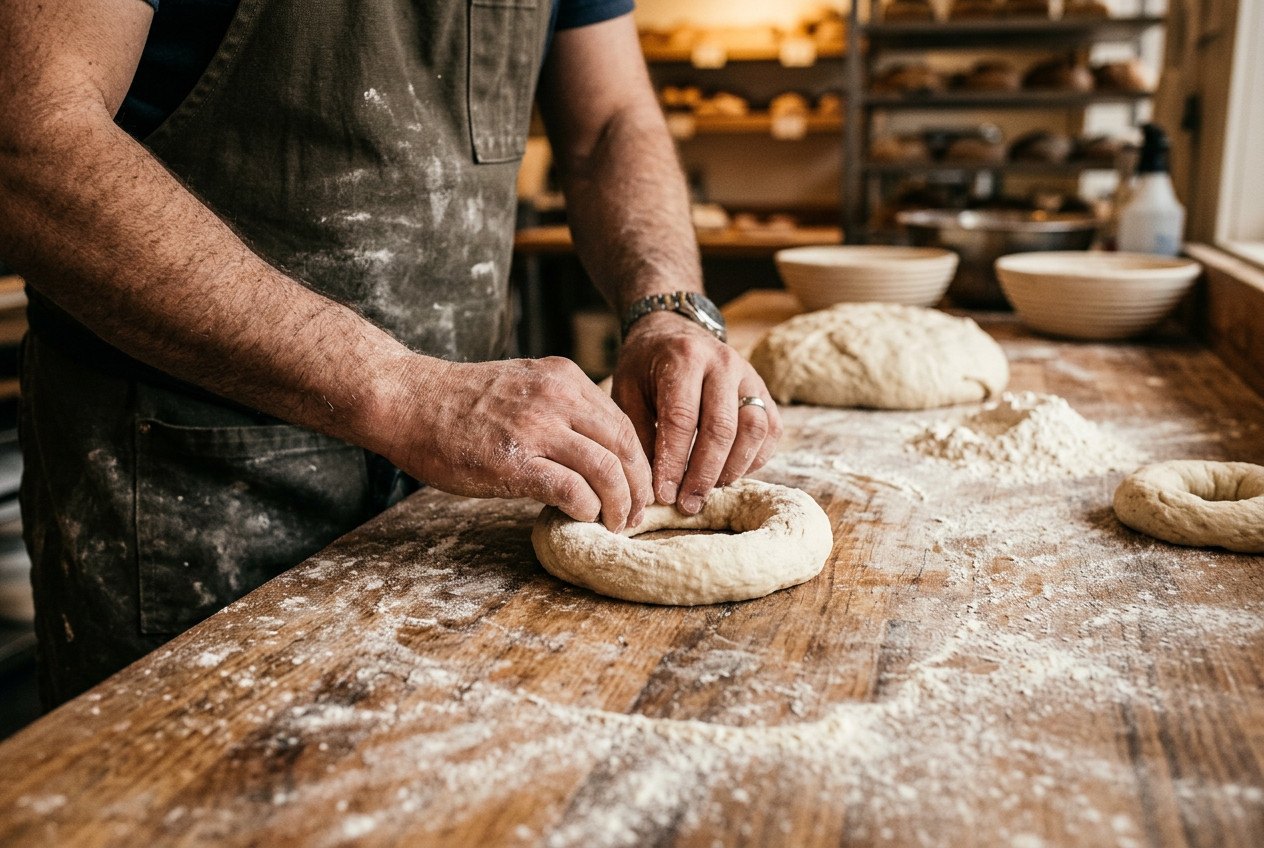
Scale into equal pieces, roll each into a rope, wrap it around the palm and seal the join by rolling it under pressure. A weak seal is what makes a bagel burst open in the kettle.
Shaped rings go onto trays and into the cooler overnight. This is where flavour is actually made. Skipping this step is the single most common reason a home bagel tastes flat.
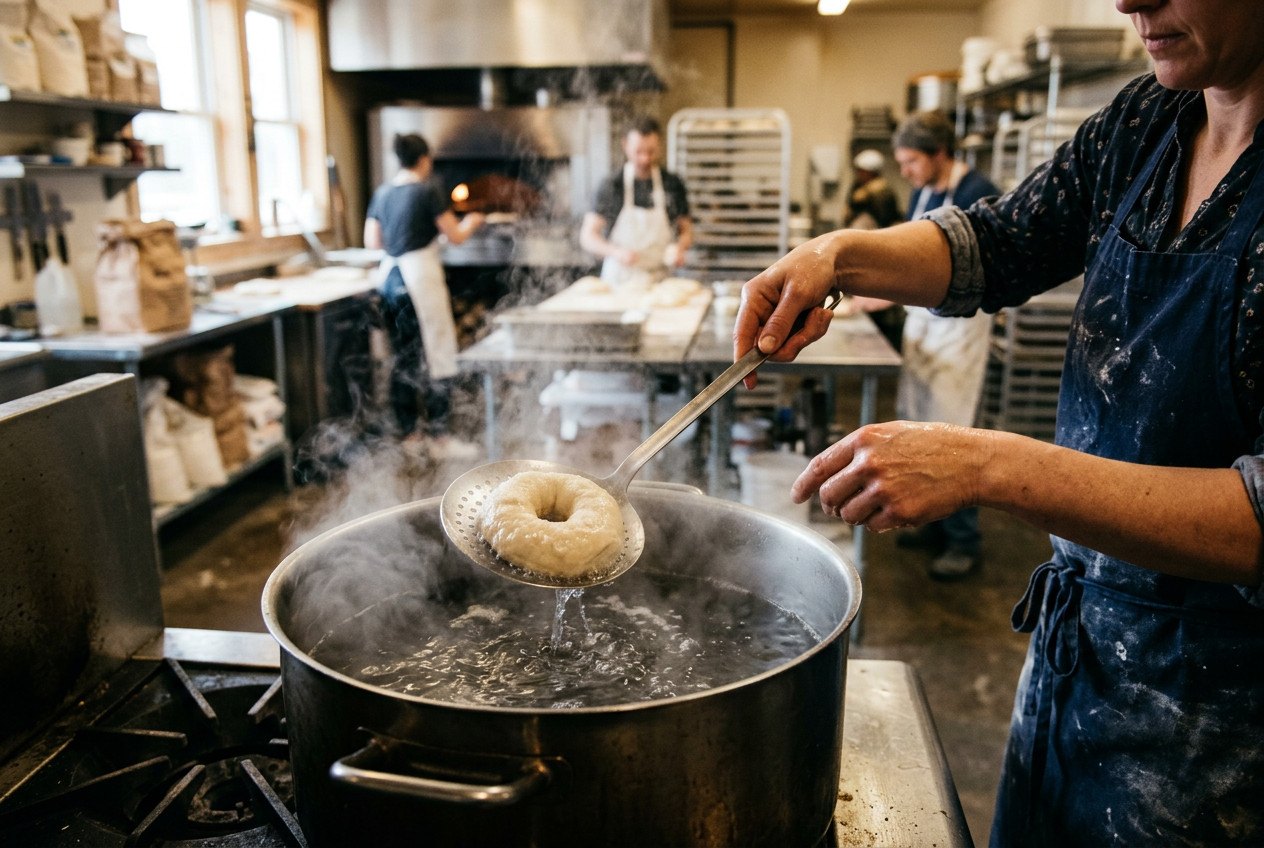
Into boiling water with malt, 45 seconds a side. Longer gives a thicker, chewier skin; shorter gives a softer, more bread-like result.
Straight from the water into the seed tray while the surface is still wet, then onto the deck at 240°C until deep gold.
Every one of these we have made ourselves at some point.
A slack dough will not hold a defined ring. Bagel dough should feel stiff and almost unfriendly compared to bread dough.
You will get something edible and entirely forgettable. The overnight rest is the flavour.
Past about two minutes the skin turns leathery and the crumb goes gummy just beneath it.
A cool oven means no spring, and a bagel that is pale, flat and tough rather than glossy.