New York
Boiled in water with barley malt, baked in a standard deck oven. Larger, softer-crumbed, a restrained sweetness and a definite chew. The style most people picture.
The regional styles differ in real, specific ways — sweetener, boil, oven and crumb. Here is what actually changes.
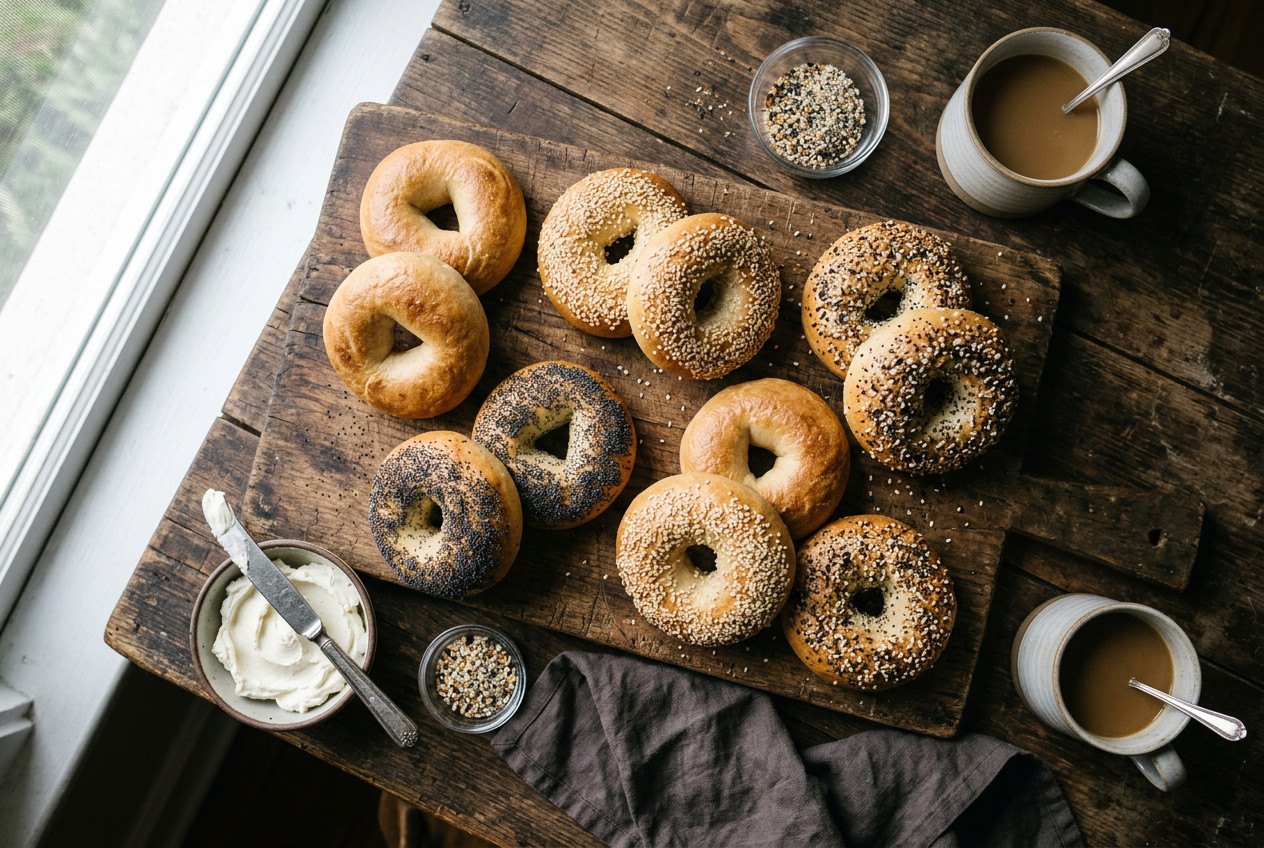
Each is internally consistent. None is objectively correct.
Boiled in water with barley malt, baked in a standard deck oven. Larger, softer-crumbed, a restrained sweetness and a definite chew. The style most people picture.
Boiled in honey-sweetened water and baked in a wood-fired oven. Smaller, denser, noticeably sweeter, with a blistered crust and a wider hole. Almost always sesame or poppy.
Leavened with a starter instead of commercial yeast and given a longer ferment. Tangier and more open in the crumb — a fair bit further from a traditional bagel.
You can judge most of the process from the outside.
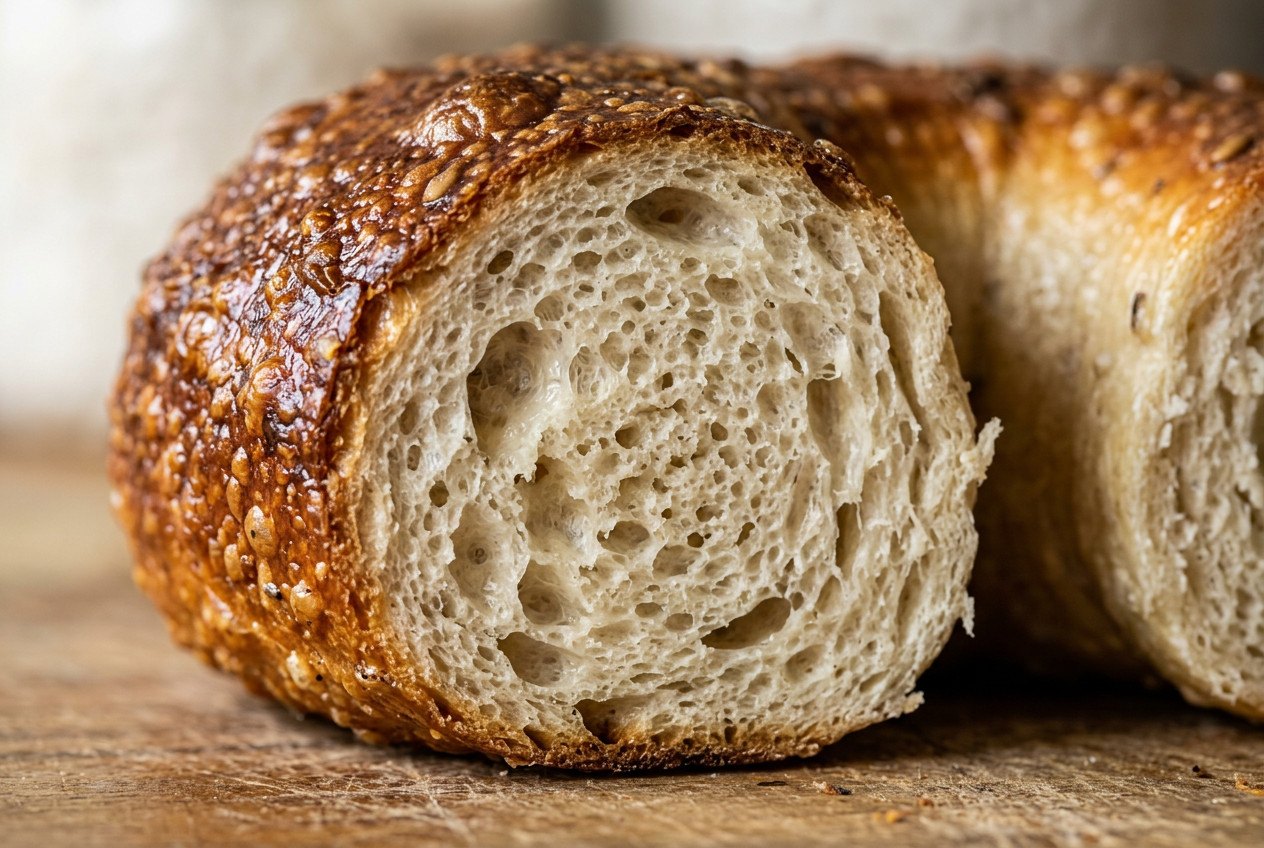
The kettle stage was done properly and the oven was hot enough.
It was probably never boiled at all — this is a bread roll shaped like a bagel.
Correct — a bagel should not look like a ciabatta inside.
Over-proofed, or hydrated more like a bread dough.
The ring was sealed weakly before boiling.